2026 Top TV Cabinet Wall Unit Types for Global Buyers
As global homes become more connected and space-conscious, the Tv Cabinet Wall Unit is evolving beyond a simple television stand. It now combines media storage, display shelving, cable management, and architectural styling. Buyers increasingly expect one coordinated solution for apartments, villas, hotels, and serviced residences.
Market evidence supports this shift. Grand View Research reports continued growth in the global home furniture market, driven by urbanization, renovation activity, and demand for multifunctional products. Fortune Business Insights also identifies modular furniture and space-saving design as important growth areas. Meanwhile, Deloitte’s digital consumer research shows that connected entertainment remains central to household technology spending, although televisions are no longer purchased as isolated products.
The details matter. A practical wall unit may include adjustable shelves, concealed wiring channels, soft-close doors, ventilation gaps, and durable engineered panels. These features affect installation time, product safety, and long-term customer satisfaction. Materials should also match the destination market, from warm oak finishes in residential interiors to easy-clean laminates in hospitality projects.
However, market forecasts do not always agree. Definitions, regions, and research methods differ. That limitation deserves attention. Global buyers should compare supplier experience, load-bearing specifications, packaging performance, compliance documentation, and after-sales support. A visually attractive unit can still fail if its wall anchors are unsuitable or its ventilation is poor.
This guide examines the leading 2026 Tv Cabinet Wall Unit types for international buyers. It connects design trends with practical procurement decisions. The aim is not merely to follow fashion. It is to select reliable, adaptable, and commercially sensible solutions for real interiors.
What a TV Cabinet Wall Unit Is and How It Functions
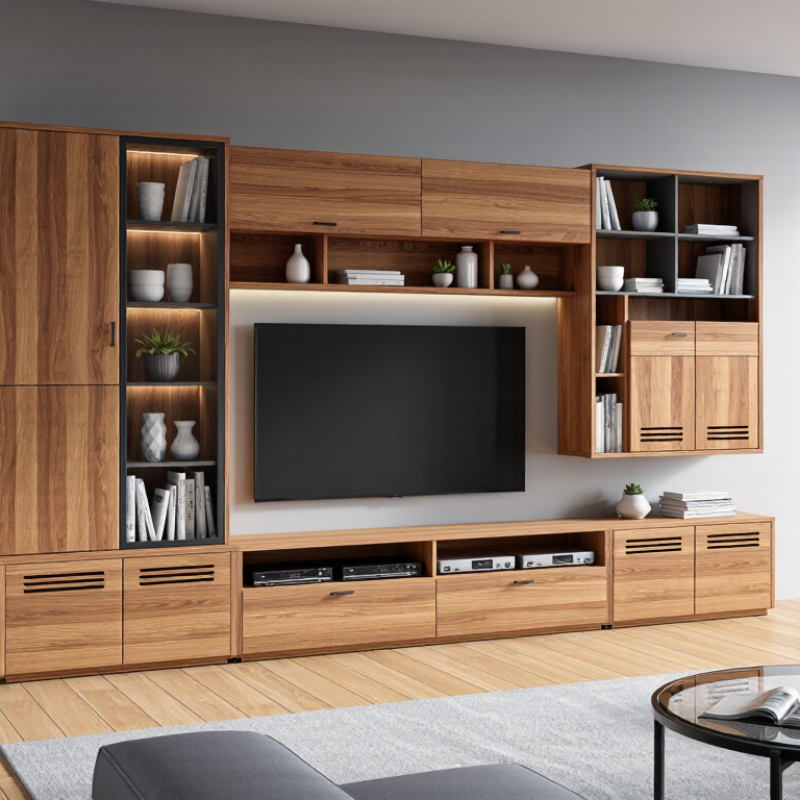
A TV cabinet wall unit combines a television shelf, storage compartments, and vertical wall furniture in one coordinated structure. It may include closed cabinets, open display niches, cable channels, and adjustable shelving. Unlike a simple TV stand, it uses the wall’s height to organize equipment and reduce visual clutter.
Its main function is practical. The lower cabinet supports media devices, books, and household items. Open sections allow remote controls or speakers to remain accessible. Closed doors protect cables and equipment from dust. A rear ventilation gap is essential, especially when devices produce heat. Without airflow, performance may decline over time.
Mounting requires careful planning. The wall must support the unit’s weight, not just the television. Installers should check wall materials, anchor points, socket locations, and viewing height before drilling. Cable openings should be large enough for replacement wires. Small details matter.
Materials also affect daily use. Engineered wood offers stable sizing, while solid wood may expand with humidity. Glass doors look light but need safer hardware and regular cleaning. In real projects, buyers sometimes prioritize appearance and underestimate storage depth. That choice can become inconvenient. A deeper cabinet is not always better, either. It may block walkways or reduce ventilation. The most reliable design balances screen size, room scale, equipment access, and local installation conditions.
2026 Top TV Cabinet Wall Unit Types for Global Buyers
What a TV Cabinet Wall Unit Is and How It Functions
A TV cabinet wall unit combines a media cabinet with storage, display shelving, and cable-management space. The chart shows practical minimum planning widths for common configurations. Values are calculated from standard 16:9 TV screen geometry, using the screen width plus 10 cm of clearance on each side. Actual furniture dimensions may vary by design, mounting hardware, and storage requirements.
Main Types of TV Cabinet Wall Units for 2026
Main Types of TV Cabinet Wall Units for 2026
Floating TV cabinet wall units remain popular in compact apartments and modern living rooms. Their raised design creates visible floor space and simplifies cleaning. I recommend checking wall strength before selecting one. Plasterboard, brick, and concrete require different fixing methods. A poorly planned installation can damage both the cabinet and the wall.
Floor-standing wall units offer stronger storage capacity for books, consoles, speakers, and media accessories. Modular units allow buyers to combine open shelves, closed cupboards, and display sections. Corner units suit narrow rooms, although their deep compartments can become difficult to reach. Integrated lighting adds atmosphere, but excessive brightness may cause screen reflections. Measure the viewing distance carefully.
Some 2026 designs combine the television cabinet with vertical storage towers. Others use sliding doors to protect items from dust. Natural wood finishes create warmth, while engineered panels provide more consistent sizing and easier international production. Check panel thickness, edge sealing, hardware quality, and cable openings before ordering. These details often matter more than decorative grooves. I have seen attractive units fail because their ventilation was ignored. That mistake deserves more attention. Buyers should also confirm packaging strength, assembly instructions, safety labeling, and local installation requirements before shipment.
Global Buying Factors: Size, Standards, Shipping, and Installation
For global buyers, TV cabinet wall units in 2026 are moving toward floating, modular, and full-height storage designs. The right choice depends on room size, wall structure, and viewing distance. Measure the television, soundbar, cables, and ventilation gaps in millimetres before ordering. Imperial measurements should be confirmed to prevent conversion errors. A few centimetres matter.
International standards also need careful checking. Confirm the television’s VESA mounting pattern and the cabinet’s rated load. Electrical compartments should suit the destination voltage, frequency, and plug requirements. Ventilation openings must remain clear around media equipment. These details are often ignored during visual planning. That can create costly adjustments later. In my project reviews, cable access is one of the most frequently underestimated requirements.
Shipping affects both cost and condition. Flat-packed units usually reduce freight volume, but assembly quality becomes critical. Ask for reinforced corners, moisture protection, clear hardware labels, and cartons sized for narrow stairways. Wooden pallets may require compliant treatment documents in some markets. Installation should match the wall material, whether concrete, brick, or light partition. Use suitable anchors and locate structural studs whenever possible. A floating unit may look clean, but it needs accurate levelling and dependable support. Local installers should handle electrical connections when required. I still find that installation drawings are sometimes too optimistic, so buyers should request real dimensions and wall-clearance diagrams before production.