
How to Choose the Best Car Perfume Diffuser
Choosing a Car Perfume Diffuser is about more than finding a scent you like. It also means considering how the fragrance is released, how easily the device fits your car, and whether its intensity stays comfortable during a drive. The market reflects growing interest in scent products: Grand View Research estimated the global air freshener market at approximately USD 13.3 billion in 2023 and projected continued growth through 2030. That figure covers more than automotive products, so it should be read as broad market context, not proof that every diffuser performs well.
Small details matter. A vent-mounted diffuser may spread fragrance when the fan is running, while a passive design may release it more gradually. A sunny dashboard, a warm cabin, or a long commute can change how quickly a fragrance fades. Look for clear refill information, adjustable output, secure mounting, and straightforward care instructions. Check the product’s materials and follow its usage guidance, especially if you prefer a subtle scent.
Less can be better. A strong fragrance may feel pleasant in a shop but overwhelming in a closed cabin. No single format suits every vehicle or passenger, and product descriptions rarely capture personal sensitivity. This guide compares diffuser styles, scent control, installation, maintenance, and value, so you can choose with practical evidence rather than packaging claims. We will also consider trade-offs. A diffuser that looks elegant may still be awkward to refill.
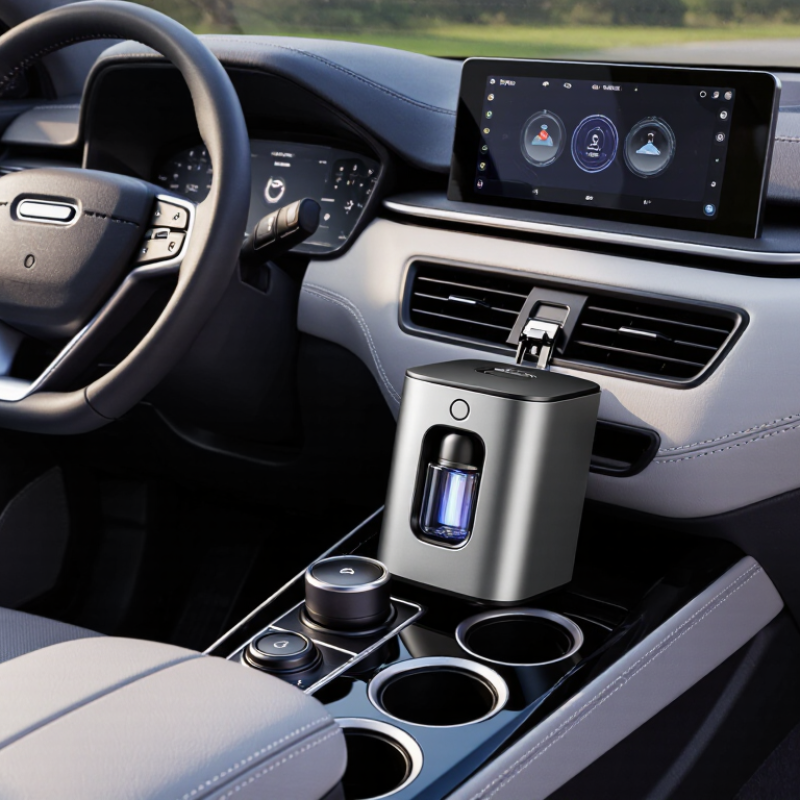
Table of Contents [Hide]
What a Car Perfume Diffuser Is and How It Works
A car perfume diffuser releases fragrance into the cabin through evaporation, airflow, or gentle heat. Passive models use a scented pad, wood, or liquid-soaked material; air passing over it carries volatile fragrance molecules through the car. Vent-mounted versions rely on the air-conditioning stream, so the scent may fade when the fan is off. Heated or powered diffusers can release fragrance more steadily, but their output depends on settings and placement. It is a small device, not an air purifier.
The U.S. Environmental Protection Agency’s “The Inside Story: A Guide to Indoor Air Quality” reports that indoor pollutant levels are often two to five times outdoor levels, and can occasionally exceed them by more than 100 times. Those figures describe indoor environments generally, not car cabins or perfume diffusers. Still, they are a useful reminder: fragrance adds scent, but does not remove pollutants. In a parked car on a warm afternoon, a diffuser may smell stronger because heat encourages evaporation. Start with a low-output setting, keep liquid away from screens and upholstery, and stop using it if the scent causes discomfort. I’ve found placement matters more than expected. A vent clip near the driver can feel overpowering, even when the same diffuser seems mild elsewhere.
| Diffuser Type | How It Works | Power Source | Scent Control | Advantages | Points to Consider | Best Suited For |
|---|---|---|---|---|---|---|
| Vent-Clip Passive Diffuser | A scented pad, porous material, or small fragrance cartridge releases volatile fragrance compounds into air moving through the vehicle’s air vent. | None; airflow from the vehicle’s ventilation system helps distribute the scent. | Usually adjusted by changing the vent airflow or repositioning the clip. Some models have an adjustable opening. | Compact, simple to install, and does not require a battery or electrical connection. | Scent strength can vary with airflow and temperature. Check that the clip does not obstruct vent controls or airflow. | Drivers seeking a straightforward, low-maintenance option. |
| Hanging or Dashboard Passive Diffuser | Fragrance evaporates from a scented card, porous object, or absorbent material into the cabin air. | None. | Limited; exposure to moving air and warmer cabin temperatures can increase evaporation. | No wiring, charging, or moving parts; easy to use. | Keep it away from the driver’s sightline, airbags, pedals, and surfaces that could be marked by fragrance oil. | Drivers who prefer a basic diffuser without a powered device. |
| Electric Fan Diffuser | A small fan moves cabin air across a fragrance pad or cartridge, helping spread its aroma. | Typically a rechargeable battery or a vehicle power connection; check the specific product. | May offer fan-speed settings or timed operation. | Can provide more consistent airflow than a passive diffuser, including when the vehicle’s vents are off. | Requires power and may need occasional charging or cartridge replacement. Fan noise and settings vary. | Drivers who want adjustable scent distribution without spraying liquid into the cabin. |
| Ultrasonic Diffuser | A vibrating element breaks a water-and-fragrance mixture into a fine mist. The device disperses that mist into the cabin. | Usually a rechargeable battery or vehicle power connection. | Often controlled through operating modes or intermittent mist settings. | Can produce visible mist and may allow adjustable operation. | Needs water and cleaning. Use only liquids and quantities approved by the device maker; avoid spills near vehicle electronics. | Drivers who prefer a powered mist diffuser and are comfortable with added cleaning. |
| Nebulizing Diffuser | Uses airflow to atomize fragrance oil into small droplets, generally without adding water. | Usually a rechargeable battery or vehicle power connection. | May provide adjustable output or timed fragrance bursts. | Can deliver a concentrated aroma without a water reservoir. | Fragrance may feel strong in a small cabin. Check oil compatibility and follow cleaning instructions. | Drivers who want adjustable, concentrated fragrance and are comfortable maintaining the device. |
| Heated Diffuser | Gentle heat warms a fragrance pad or material, increasing evaporation into the surrounding air. | Typically a vehicle power connection or rechargeable battery. | May have on/off or heat-level settings, depending on the design. | Does not rely on the vehicle’s ventilation airflow to release fragrance. | Heat can affect fragrance release. Follow the maker’s safety instructions and keep the device clear of heat-sensitive materials. | Drivers who want a powered diffuser with a simple operating method. |
| Key Factors to Compare | Consider diffuser type, refill availability, power needs, installation method, and whether the fragrance is released passively or by a powered mechanism. | Look for a way to reduce or stop output if the scent feels too strong. | Choose a design that suits the size of the cabin and your preferred level of maintenance. | Check compatibility with the vehicle, placement guidance, cleaning requirements, and whether fragrance oils or refills are sold separately. | Choose based on convenience, scent intensity preference, and safe, secure placement. | |
Fragrance strength and refill life vary with the formulation, diffuser settings, cabin temperature, airflow, and frequency of use. Secure the device so it cannot interfere with driving, visibility, controls, or airbag deployment zones.