Top 10 Types of Work Tables for Global Buyers?

Choosing the right work tables is more complex than comparing dimensions and prices. Global buyers must match each table with its working environment, user, and daily load. A packing station may need shelves, casters, and cable access. A food preparation table may require stainless steel, rounded edges, and easy cleaning. A laboratory table demands stability, chemical resistance, and carefully specified surfaces.

This guide examines the top 10 types of work tables used across workshops, warehouses, kitchens, laboratories, offices, and production areas. It considers stainless steel tables, butcher block models, adjustable-height designs, mobile tables, packing stations, machine stands, welding tables, laboratory benches, cleanroom tables, and modular industrial systems. Each type serves a different purpose. Each also has trade-offs.

No table is perfect.

Real purchasing decisions require more than attractive product photos. Buyers should review load ratings, surface thickness, frame construction, height range, wheel locks, corrosion resistance, packaging quality, and replacement-part support. Measurements should account for doors, aisles, lifts, and operator movement. A heavy-duty label can be vague, so request test data and clear specifications from the manufacturer. Supplier experience matters, especially when exporting equipment across regions. Buyers should also confirm applicable safety, food-contact, electrical, and workplace requirements before ordering. These rules vary by market.

The best choice is rarely the cheapest option. A lower price may hide weaker welds, unstable legs, or limited warranty coverage. On the other hand, an expensive table may include features your team never uses. Careful comparison helps reduce those mistakes and supports a safer, longer-lasting workspace.
Top 10 Types of Work Tables for Global Buyers?

Work Table Fundamentals: Functions, Components, and Common Applications

Top 10 Types of Work Tables for Global Buyers

A work table is more than a flat steel surface. It controls workflow, hygiene, reach, storage, and worker posture. Common types include prep, utility, packing, welding, drafting, computer, laboratory, cleanroom, refrigerated, and mobile tables. Each design serves a different operating environment.

Material selection matters. Stainless steel suits food preparation, laboratories, and wet areas. Powder-coated steel often fits workshops and packing rooms. The FDA Food Code 2022 emphasizes cleanable surfaces and proper equipment placement in food operations. NSF/ANSI 2-2022 also addresses food-equipment materials, construction, and sanitation. A food-preparation table may need a raised edge, adjustable feet, and a welded undershelf. Small gaps collect debris quickly.

Ergonomics deserves equal attention. The U.S. Bureau of Labor Statistics reported more than 888,000 private-industry days-away cases in its 2023 SOII. Sprains and strains remain important workplace concerns. Table height, leg clearance, and tool placement can reduce unnecessary reaching. A low shelf can help storage, yet it can also become a knee trap. Buyers should check load ratings, surface thickness, assembly quality, and cleaning access. One practical mistake is choosing maximum storage instead of better movement. That decision often looks efficient on paper. In daily use, it may slow every task.

Top 10 Types of Work Tables for Global Buyers

Work Table Fundamentals: Functions, Components, and Common Applications

The chart compares representative nominal working heights commonly specified for different work-table applications. Most professional tables are designed around ergonomic standing or seated work, while adjustable-height models cover the widest operating range. Final specifications should be confirmed according to workload, user height, equipment, hygiene requirements, and local safety standards.

Basic, Stainless Steel, and Commercial Kitchen Work Tables

Top 10 Types of Work Tables for Global Buyers?

Basic, Stainless Steel, and Commercial Kitchen Work Tables

Work tables support preparation, assembly, packing, and light production in many workplaces. Basic work tables usually use painted steel, laminate, or sealed wood. They offer practical workspace at a controlled cost. However, low price can hide weak frames, unstable legs, or difficult cleaning. Check the load rating, tabletop thickness, edge design, and height before ordering.

Stainless steel work tables suit food preparation, laboratories, healthcare areas, and humid environments. Their smooth surfaces resist moisture and are easier to sanitize when properly maintained. Look for suitable steel thickness, reinforced undersides, adjustable feet, and rounded corners. A thin top may dent during transport. That matters. Ask for surface specifications, packaging details, and test documents before approving a large international shipment.

Commercial kitchen work tables often include undershelves, backsplashes, drawers, or casters. These features improve workflow near ovens, sinks, and refrigeration units. Mobile models need locking wheels. Fixed models usually provide better stability.

Other useful types include butcher-block tables, prep tables, folding tables, wall-mounted tables, adjustable-height tables, and sink-integrated tables.

Space planning must consider door widths, worker movement, local electrical requirements, and cleaning routines. One overlooked detail is assembly access. A table may fit the room but fail through the doorway.

Global buyers should compare dimensions, materials, certifications, warranty terms, and after-sales support. Claims should be verified, not simply accepted.

Heavy-Duty, Mobile, and Adjustable-Height Work Tables

Top 10 Types of Work Tables for Global Buyers?

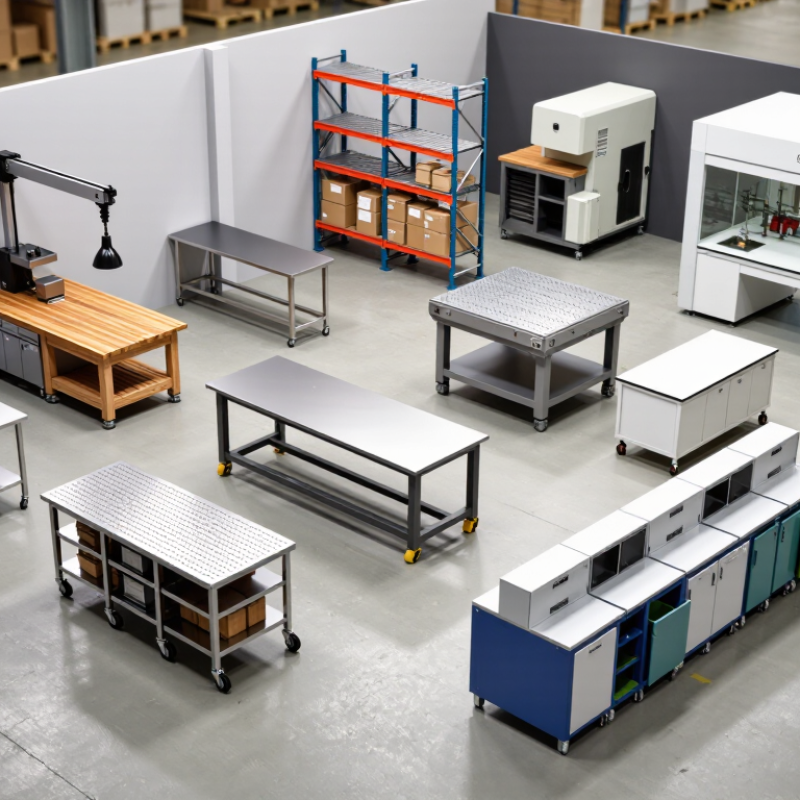
Global buyers often compare ten work table types by load, movement, and height control.

Heavy-Duty Work Tables

Heavy-duty tables suit welding, packing, repairs, and machine-side assembly. A thick steel frame reduces vibration. A reinforced top handles vises, presses, and stacked components. Check the rated load, not just the tabletop thickness. Dynamic loads can exceed static loads.

Mobile Work Tables

Mobile work tables add flexibility to changing production areas. Locking casters should roll smoothly across concrete, tile, or sealed floors. Four swivel casters improve turning, but they may reduce stability under force. Two fixed casters can track better in long aisles. Test the brakes with a loaded table. Small details matter.

Adjustable-Height Work Tables

Adjustable-height tables support seated and standing tasks. Manual cranks cost less and remain dependable without power. Electric models offer faster adjustment and precise positioning. Confirm the adjustment range, control protection, and cable routing. Workers need enough knee clearance and a stable working edge. An uneven floor can make a good table feel poor. This is easy to overlook.

Buyers should also verify assembly instructions, spare hardware, packaging strength, and local service access. Product data can look complete, yet real installation may expose gaps. Allow time for a physical trial before ordering large quantities.

Welding, Laboratory, Packing, and Cleanroom Work Tables

Top 10 Types of Work Tables for Global Buyers?

Welding, Laboratory, Packing, and Cleanroom Work Tables

Work tables should match the task, not only the available floor space. Welding tables need rigid steel frames, heat resistance, and accurately placed fixture holes. A stable top reduces movement during cutting, grinding, and assembly. Rounded edges can also improve operator safety. Details matter.

Laboratory work tables usually require chemical-resistant surfaces, adjustable feet, and easy cleaning. Buyers should check load ratings for balances, microscopes, or water equipment. Packing tables need a different layout, with space for cartons, scales, tape, and labeling tools. Height adjustment can reduce wrist and shoulder strain during repeated packing. Small improvements help.

Cleanroom tables demand stricter control. Stainless steel surfaces, sealed joints, and smooth undersides reduce dust traps. Some facilities also need grounding, mobile casters, or compatibility with controlled cleaning agents. Specifications should match the room classification and cleaning procedure. Over-specification wastes money, but under-specification creates maintenance problems. It is easy to focus on appearance and miss the operator’s reach distance. A practical trial with real tools, gloves, and containers often reveals weaknesses before purchase.

Top 10 Types of Work Tables for Global Buyers? - Welding, Laboratory, Packing, and Cleanroom Work Tables

No. Work Table Type Typical Applications Common Materials Typical Load Capacity Common Size Range Key Buying Considerations
1 Welding Work Table Metal fabrication, welding, repair, and assembly Carbon steel, stainless steel, or cast iron 500–3,000 kg 1,200–2,400 × 600–1,200 mm Plate thickness, heat resistance, flatness, fixture holes, grounding, and corrosion protection
2 Laboratory Work Table Sample preparation, testing, research, and analytical work Stainless steel, epoxy resin, phenolic resin, or compact laminate 150–500 kg 900–2,400 × 600–900 mm Chemical resistance, easy cleaning, vibration control, backsplash options, and height selection
3 Packing Work Table Order packing, carton assembly, labeling, and dispatch operations Powder-coated steel, stainless steel, laminate, or hardwood 150–600 kg 1,200–2,000 × 600–900 mm Adjustable height, shelves, carton holders, cutting tools, lighting, and ergonomic reach distance
4 Cleanroom Work Table Pharmaceutical, semiconductor, medical, and precision assembly work 304 or 316 stainless steel 100–400 kg 900–1,800 × 600–900 mm Weld quality, rounded corners, low-particle surfaces, cleanability, casters, and cleanroom compatibility
5 Stainless Steel Work Table Food preparation, commercial kitchens, healthcare, and wet processing AISI 304 or AISI 316 stainless steel 200–800 kg 900–2,400 × 600–900 mm Steel grade, sheet thickness, adjustable feet, undershelf design, hygiene, and local food-safety requirements
6 ESD Work Table Electronics assembly, inspection, repair, and testing Conductive laminate, steel frame, and grounded accessories 100–350 kg 900–1,800 × 600–800 mm Surface resistance, grounding points, wrist-strap connection, monitor arms, and cable management
7 Adjustable-Height Work Table Multi-shift production, ergonomic assembly, inspection, and office-industrial work Steel frame with laminate, wood, or stainless steel top 100–400 kg 1,000–2,000 × 600–900 mm Manual or electric adjustment, height range, lifting speed, stability, noise, and power requirements
8 Mobile Work Table Flexible production lines, maintenance, tooling, and material handling Powder-coated steel, stainless steel, or aluminum 100–500 kg 800–1,800 × 500–900 mm Caster diameter, wheel locking system, frame strength, maneuverability, handles, and storage capacity
9 Machine Shop Work Table Machining support, tool storage, maintenance, and mechanical assembly Heavy-gauge steel, hardwood, or steel with a replaceable top 500–2,000 kg 1,200–2,400 × 600–1,200 mm Bench rigidity, drawer load rating, vice mounting, impact resistance, and tool organization
10 Inspection Work Table Quality control, dimensional inspection, visual checks, and product testing Steel frame, granite, stainless steel, or precision laminate 150–800 kg 900–2,400 × 600–1,200 mm Vibration control, surface flatness, lighting, measuring equipment support, drawers, and calibration requirements

Note: Load capacities and dimensions are typical market ranges. Actual specifications depend on the table structure, top thickness, accessories, and intended working environment.

Global Buyer Criteria: Materials, Standards, Customization, and Logistics

Top 10 Types of Work Tables for Global Buyers?

Global buyers usually compare mobile, fixed, packing, welding, butcher, cleanroom, laboratory, ESD, adjustable, and machine work tables. The table type should match the task, load, cleaning routine, and workspace. Stainless steel suits wet processing, while laminated surfaces support lighter assembly. For demanding hygiene environments, buyers should check NSF/ANSI 2 or EN 1672-2 requirements. ISO 9001 remains useful for evaluating supplier quality systems. The ISO Survey 2023 recorded more than one million ISO 9001 certificates worldwide, but certification alone does not prove product quality.

Material thickness matters. A 1.2-millimeter top may suit light packing, while heavier fabrication needs stronger reinforcement. Ask for load testing, weld photographs, surface-finish data, and corrosion-resistance details. Customization may include shelves, drawers, casters, backsplash height, electrical routing, and adjustable feet. Yet, customization can create replacement problems. I have seen buyers approve attractive drawings, then discover that local technicians cannot match unusual fittings. Request production samples or a detailed approved drawing before mass production.

Tips: Confirm dimensions in millimeters. Check pallet limits and door clearance. UNCTAD’s Review of Maritime Transport 2024 emphasizes the importance of maritime logistics for global merchandise trade, which exceeds 80% by volume. Therefore, export packing, moisture protection, HS classification, and documentation deserve early review. Specify Incoterms clearly. A low factory price can become expensive after crating, port handling, insurance, and inland delivery. Allow tolerance. Real workshops are rarely perfectly level.