What Is a Travel Playard and How Does It Work?
A Travel Playard is a portable, enclosed space designed for a baby or young child to play, rest, or stay nearby while a caregiver travels. It usually has a lightweight frame, fabric sides, and mesh panels that let air circulate and make it easier to see inside. Some models include a bassinet attachment or changing station, but features vary. The name can make these products sound interchangeable. They are not.
Most playards open into a freestanding frame and lock into place, creating a sturdy, raised-sided area. A firm base or mattress fits inside, while the mesh walls help keep toys and little hands within reach. Many models fold into a carry bag for transport in a car or between rooms. Setup should follow the product manual; a frame that looks open may not be fully locked. Check every latch.
Before use, inspect the frame, fabric, and locking points for wear or damage. Use only the mattress and accessories approved for that specific model, and keep the playard clear of loose bedding and bulky toys. A playard is not a substitute for supervision, and its suitability for sleep depends on the manufacturer’s instructions and the child’s age and size limits. Small details matter. Travel can be tiring, and setup in a dim hotel room is not always effortless. Knowing how the playard works helps caregivers choose an appropriate model, prepare it correctly, and understand its limits.
What a Travel Playard Is and What It Is Designed For
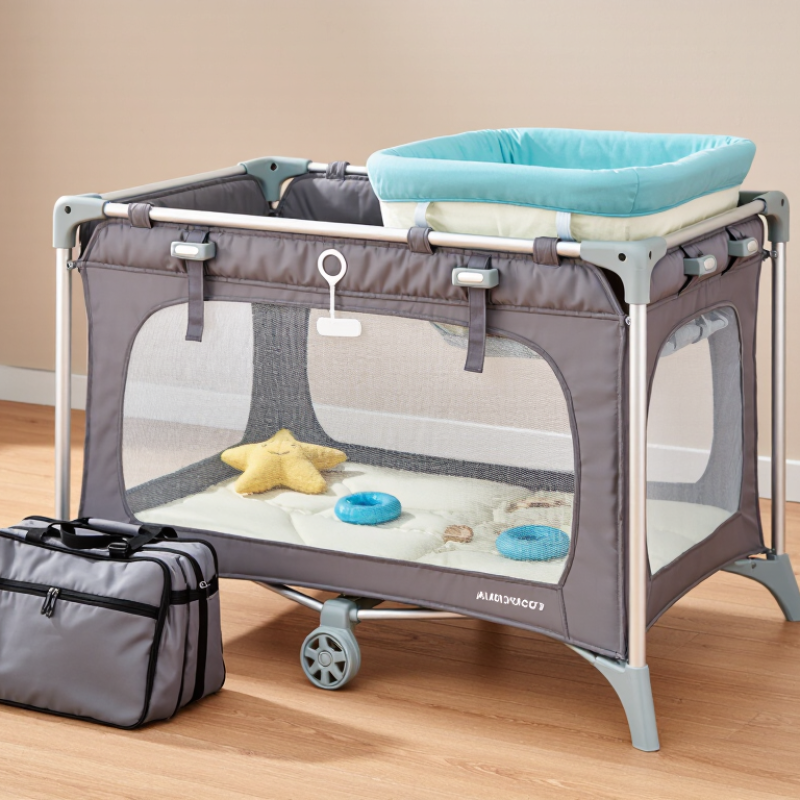
A travel playard is a portable, enclosed space for an infant to rest or play under adult supervision. Most use a folding frame, fabric sides, and a firm base designed to fit inside the frame. When folded, the unit can be carried between rooms or packed for a trip. Setup is usually simple, but the frame must lock fully before use. Check each hinge. A partly locked corner can make the structure unstable.
Its purpose is convenience, not a promise of better sleep. The American Academy of Pediatrics recommends a firm, flat, non-inclined sleep surface, with no loose bedding. Use only the mattress pad supplied or specified for that particular playard; extra padding can create gaps. The U.S. Consumer Product Safety Commission’s play yard standard, 16 CFR Part 1221, sets safety requirements for these products. Still, safe setup matters. The CDC reports roughly 3,400 sudden unexpected infant deaths in the United States each year; that figure covers several causes and is not specific to playards. A travel playard should be placed on a level floor, away from cords and nearby furniture, and used within its stated limits. It can be useful in a hotel room or at a relative’s home. It is not a substitute for supervision.
Key Parts That Make Up a Travel Playard
What Is a Travel Playard and How Does It Work?
Key Parts That Make Up a Travel Playard
A travel playard is a portable enclosure with a folding frame, mesh sides, and a firm floor or mattress. The frame supports the structure; hinged joints let it fold for transport. Locking rails or braces hold it open during use. Check every joint. A partly engaged lock can make the frame unstable. ASTM International’s F406 standard covers safety requirements for play yards, including structural strength and locking mechanisms. Look for clear setup instructions and inspect the frame for bent tubes, loose fabric, or damaged seams.
Mesh panels provide visibility and airflow, while the mattress should lie flat and fit the playard without gaps. CDC estimates that about 3,400 infants die suddenly and unexpectedly each year in the United States, underscoring why a sleep space’s setup matters. Keep it bare: the American Academy of Pediatrics recommends a firm, flat sleep surface without soft bedding. A carry bag makes storage easier, but it does not protect a damaged playard. It is easy to focus on portability and overlook mattress fit. Check the model’s instructions each time; folding designs can feel intuitive, but small steps are easy to miss.
What Is a Travel Playard and How Does It Work? - Key Parts That Make Up a Travel Playard
| Part | What It Is | How It Works | Practical Notes |
| Folding frame | The lightweight structure that supports the playard’s sides and floor. | Hinged or telescoping sections fold for transport and lock into position when opened. | Follow the product instructions to confirm every frame joint is fully locked before use. |
| Locking joints and release mechanism | Buttons, hinges, or levers that secure the frame in its open or folded position. | The joints hold the rails rigid when set up; the release mechanism allows the frame to fold for storage. | Keep fingers clear of hinges, and never use the playard if a lock is damaged or will not engage. |
| Fabric enclosure and mesh panels | The soft-sided walls, often made with durable fabric and mesh sections. | The enclosure attaches to the frame to create a defined play or rest area; mesh allows airflow and visibility. | Check seams, fasteners, and mesh for tears or loose parts before each use. |
| Floor support | The base that spans the bottom of the playard and supports the mattress or pad. | It helps distribute weight across the frame when the playard is assembled as directed. | Use only the floor components supplied or approved for that model; do not add extra padding unless permitted. |
| Mattress or pad | A firm, fitted surface designed for the playard’s sleeping area. | It rests on the floor support and provides the designated surface for rest or sleep. | Use the correct size and fit. Keep the sleep space clear of pillows, loose blankets, and toys. |
| Feet or wheels | Contact points at the bottom of the frame; some models have wheels or casters. | They support the playard on the floor. Wheels, when present, may help reposition it and often include brakes. | Set the playard on a level surface and lock any wheels before placing a child inside. |
| Carry bag | A storage and transport bag, commonly included with a foldable model. | It holds the folded frame and related parts together for carrying or storage. | Pack the playard only when dry, and check that all pieces are accounted for before setup. |
| Optional accessories | Depending on the model, accessories may include a bassinet insert, changing station, or toy bar. | Each accessory attaches to designated points and is intended for a specific use or age range. | Use accessories only if approved for the playard, and follow their separate limits and instructions. |
How to Set Up and Secure the Playard
What Is a Travel Playard and How Does It Work?
How to Set Up and Secure the Playard
A travel playard is a portable, enclosed space for a baby to rest or play under supervision. Set it up on a flat, dry floor, away from cords, heaters, and furniture. Follow the manual’s exact unfolding sequence; some frames will not lock if the floor is lowered too early. Press each rail until it clicks, then gently test the frame. Check that the mattress lies flat and fits snugly. Do not add another mattress, padding, pillows, or toys to the sleep space.
The U.S. Consumer Product Safety Commission’s play-yard standard, 16 CFR Part 1221, incorporates requirements for structural strength, locking mechanisms, and mattress fit. These checks matter: a rail that looks upright may not be fully locked. The CDC reports about 3,400 sudden unexpected infant deaths in the United States each year; this figure covers multiple causes and is not specific to playards. Still, it reinforces why a clear, firm sleep space and careful setup matter. I sometimes find the locking sequence awkward, so pausing to recheck the manual is better than guessing.
Tips: Before each use, tug the rails and inspect hinges, seams, and locks. Use only the supplied mattress and fitted sheet. Keep it simple. After folding, confirm the frame is fully collapsed before carrying it.
How the Playard Supports a Child During Use
What Is a Travel Playard and How Does It Work?
A travel playard is a portable, enclosed space where a young child can rest or play. Its frame opens to support fabric sides and a firm, flat mattress. Mesh panels let caregivers see inside and help air circulate. The setup is useful in a hotel room, at a relative’s home, or during a busy afternoon.
The playard supports a child by creating a familiar boundary in an unfamiliar place. With a few safe toys, it can offer room to move, sit, or play while an adult stays nearby. It is not a substitute for supervision. Check that the frame is fully locked and the mattress fits as designed before each use. Follow the product’s instructions and limits for the child’s age, size, and abilities. For sleep, use only the supplied mattress and keep loose bedding, pillows, and toys out of the space. Small details matter. I sometimes find the setup less effortless than it looks; a rushed fold can leave a latch partly engaged.
Tips: Practice opening and closing it at home. Place it on a level floor, away from cords and nearby hazards, and keep your child within sight and hearing. When something feels unstable, stop and check the instructions.
How a Travel Playard Supports a Child During Use
The bars show the order of a typical use routine, not a safety rating or performance score. A playard provides an enclosed space for rest or play; use the mattress specified for the model, make sure the frame is locked, and follow the product instructions and supervision guidance.
Folding, Packing, and Basic Safety Checks
A travel playard is a portable, enclosed space for a baby to rest or play under supervision. Most models use a folding frame, fabric sides, and a removable floor pad. Folding methods vary, so check the instruction booklet before you begin. Clear the playard, release the frame locks as directed, and fold without forcing any joint. If a rail resists, pause and check for a caught panel or missed step. A stubborn fold is a useful warning, not a reason to push harder.
Tips: Practice folding at home before packing. Keep the booklet nearby, and store small parts together if your model has them. Let damp fabric dry fully before putting the playard in its travel bag.
Before each use, place the playard on a firm, level surface and confirm that every lock is engaged. Check the mesh, seams, hinges, and frame for tears, loose parts, or sharp edges. Use only the mattress pad supplied or approved for that specific model; extra padding can create gaps. Keep the sleep area clear of pillows, blankets, and toys. One detail is easy to overlook: a playard can look open while a rail remains unlocked, so check each side by hand.