What Is an Office Cabinet and Which Type Is Right for You?
An office cabinet is more than a box with doors. It supports organization, privacy, and daily workflow in a busy workplace. The right choice depends on what you store, where it sits, and how often you need access. A cabinet beside a printer may hold paper and supplies. A lockable unit near a manager’s desk may protect confidential files. These details matter more than appearance alone.
Experienced office planners usually assess capacity, materials, security, and movement around the room. Steel cabinets offer strong durability and resist everyday impacts. Wooden cabinets can create a warmer, more welcoming atmosphere. Mobile pedestals save space and keep essential items close. Tall storage cabinets use vertical space, but they may feel unsuitable in smaller rooms. Measure the wall, doorway, and opening path before buying. Small mistakes happen.
Safety also deserves attention. Heavy cabinets should stand on stable flooring and receive suitable anchoring when required. Shelves need sensible weight limits. A lock is useful, but it does not solve every security concern. Digital records may still need separate protection. Quality hinges, smooth drawers, and clear assembly instructions often reveal more than glossy photographs.
There is no perfect office cabinet for every workplace. Budget, design, staff habits, and future growth can change the decision. This guide compares common cabinet types and explains where each one performs well. It also considers practical weaknesses, because a beautiful cabinet can become frustrating when it lacks space, mobility, or reliable access.
What Is an Office Cabinet and What Does It Do?
An office cabinet is a storage unit designed to keep documents, supplies, and equipment organized. It may have doors, drawers, shelves, or a combination of these features. Its main job is simple: protect useful items and make them easier to find. A well-used cabinet can reduce desk clutter, support privacy, and improve daily workflow. Lockable compartments also help control access to confidential records. However, a cabinet cannot replace a clear filing system. It only hides disorder.
In a small office, I have seen deep cabinets become “storage caves.” Items disappeared behind unused folders and outdated equipment. Measuring the available wall space prevents this problem. Check the cabinet’s height, depth, shelf capacity, and weight rating before buying. Steel models usually resist heavy use, while wood-based units may create a warmer appearance. Sliding doors save walkway space, but hinged doors offer wider access. Ventilation matters when storing electronics or heat-sensitive supplies. Fire-resistant construction may be appropriate for critical paper records, depending on workplace requirements. These choices are practical, but personal habits still matter.
Tips: Label shelves at eye level. Keep daily supplies near the workstation. Store rarely used items higher up. Leave some empty space for future needs. Review the cabinet every few months. I sometimes over-organize too early, and that creates extra work. Observe how people actually use the cabinet, then adjust the layout.
What Is an Office Cabinet and Which Type Is Right for You?
An office cabinet is a storage unit designed to organize documents, supplies, equipment, or personal items while keeping the workspace tidy. The chart compares representative cabinet widths to help match each type to your available floor space and storage needs.
How to choose: A compact pedestal cabinet works well under a desk, a vertical filing cabinet uses floor space efficiently, a storage cupboard is suitable for mixed supplies, and a lateral filing cabinet provides wider drawers for documents and folders. Actual dimensions vary by design and manufacturer.
What Are the Main Types of Office Cabinets?
Office cabinets do more than hide paperwork. They control movement, reduce visual clutter, and protect sensitive files from dust and daily damage. The right type depends on your floor space, storage habits, and the weight of your documents.
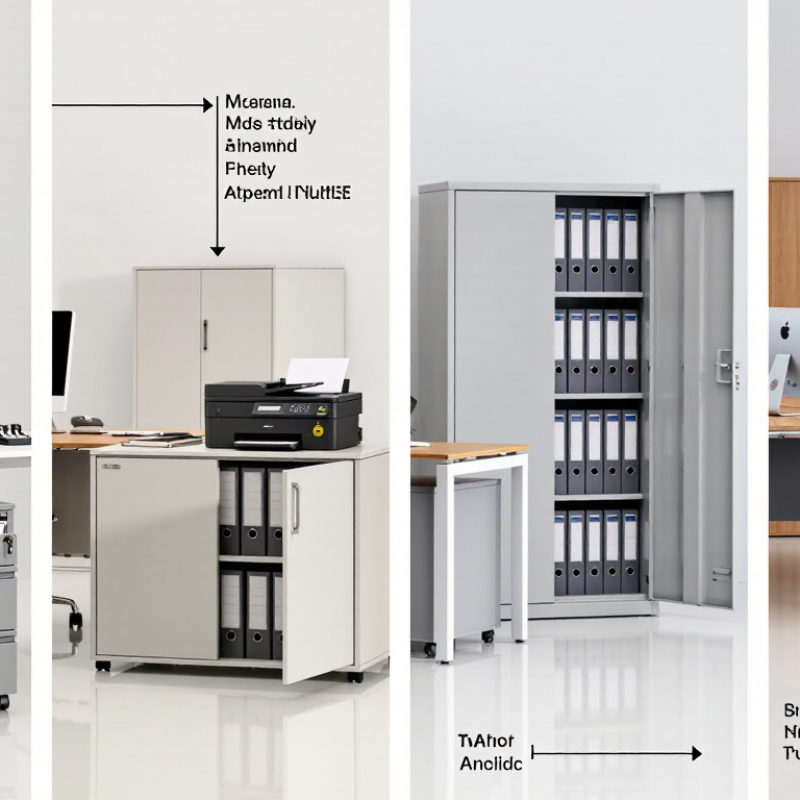
Vertical filing cabinets are narrow and tall, so they suit small offices with limited floor area. Their drawers usually hold letter or legal-size files, but the highest drawer may be uncomfortable to reach. Lateral cabinets are wider and lower. They let users view files from side to side and can also support a printer or display items. A pedestal cabinet fits beneath a desk, offering convenient personal storage without taking another wall. Mobile cabinets add flexibility, although their casters need a level floor and regular inspection. Credenzas provide broad storage for binders, equipment, and shared supplies. They look efficient, but deep shelves can become dark cluttered spaces.
Tips: Measure the doorway, wall, and drawer clearance before buying. Check the cabinet’s load rating and use heavier files in lower drawers. Choose lockable storage for confidential records, and secure tall units when required. In my experience, open shelves often fill faster than expected. I once underestimated cable space and lost useful storage behind equipment. Small details matter. Also, no cabinet is perfect. A beautiful unit may still fail if its handle height, drawer noise, or finish conflicts with everyday work. Consider how people actually move around the room, not only how the cabinet looks in a catalog.
How Do Office Cabinets Differ in Design and Materials?
Office cabinets vary widely in design, and their differences affect daily workflow. Vertical cabinets use floor space efficiently in narrow rooms, while lateral cabinets provide wider shelves and easier file access. Mobile pedestals fit beneath desks and keep frequently used documents nearby. Open shelving improves visibility, but doors offer better dust control and privacy. Glass doors add visual light, although fingerprints become noticeable.
Materials also shape durability, appearance, and maintenance. Powder-coated steel resists scratches and suits busy storage areas, but it can feel industrial. Solid wood offers warmth and strength, while wood veneer creates a similar appearance with less material. Laminate surfaces are practical for regular cleaning and usually resist everyday stains. Recycled composite panels can reduce material waste, yet their edge quality and moisture resistance require careful checking. Looks deceive.
Choosing the right cabinet depends on use, room conditions, and storage habits. Measure doorways, walking clearance, and shelf depth before ordering. Check load ratings instead of guessing from appearance. A cabinet holding heavy binders needs stronger shelves than one storing lightweight supplies. Lockable doors may protect confidential files, but they add cost and require key management. In a damp room, untreated wood may age poorly. I would also inspect hinges, handles, leveling feet, and panel edges, because small failures become irritating every day. One detail is easy to miss: a beautiful cabinet can still be inconvenient if its doors block a nearby desk or corridor.
How Do You Choose the Right Office Cabinet?
Choosing the right office cabinet starts with the work it must support.
Measure the available wall, doorway, and floor space before comparing designs. Measure twice. A cabinet that fits the room may still block drawers, walkways, or emergency access.
Think about what you will store. Paper files need adjustable shelves and strong weight ratings. Electronics require ventilation and cable openings. Shared documents may need a reliable lock and controlled key access. Do not assume a lock equals complete security. Check the cabinet’s construction, hinge quality, and resistance to forced opening. For heavy items, place them on lower shelves to reduce tipping risks. Wall anchoring may also be necessary, especially in busy offices or rooms used by children.
Material affects daily use. Powder-coated steel handles frequent movement well, while wood-based panels can create a warmer setting. I once selected a cabinet mainly for its appearance, then discovered that its shallow shelves wasted valuable space. That mistake changed how I compare products. I now check internal dimensions, shelf adjustability, cleaning needs, and warranty terms. Accessibility matters too. Users should reach common files without stretching or lifting awkwardly. Consider noise, lighting, and nearby desks. A sliding door may save space, but it can feel slow during busy work. A hinged door needs clearance. The best choice is not always the most expensive one. It should match your workflow, safety needs, available space, and realistic budget.