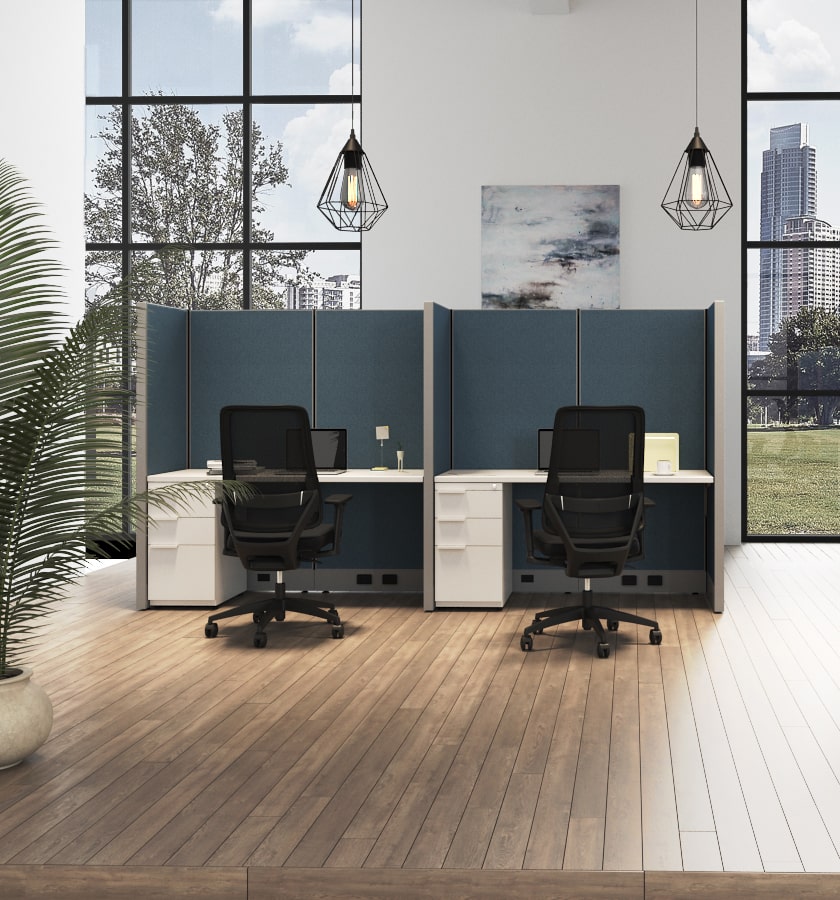
What Are the Top 10 Office Solutions for Global Buyers?
Global buyers are rethinking what an office should deliver. Desks alone are no longer enough. Today’s office solutions must support focused work, video meetings, team collaboration, employee wellbeing, and responsible resource use. A quiet booth, adjustable desk, reliable connectivity, and clear storage can shape the daily experience more than an impressive reception area.
Recent research confirms this shift. JLL’s 2024 Global Workforce Preference Survey found that many employees still value regular office interaction, while demanding greater flexibility. Gensler’s 2024 Global Workplace Survey also reported that workplace effectiveness depends on how well spaces support different work modes. These findings matter for international purchasers. A solution that performs well in London may fail in Jakarta, Toronto, or Dubai because climate, culture, building standards, and work habits differ.
Diane Hoskins, Co-CEO of Gensler, has described the change clearly: “The office is not dead; it’s changing.” That idea guides this review of the top 10 office solutions for global buyers. We examine practical performance, total ownership cost, adaptability, user comfort, and supplier reliability. We also consider sustainability claims carefully. Not every “green” product has transparent evidence. That deserves scrutiny.
The best office solutions are not always the most expensive. They are measurable, serviceable, and suitable for real people using them every day. Some recommendations may seem obvious. Others require more reflection. Procurement teams should test samples, verify certifications, and question attractive promises before signing global contracts.
Table of Contents
[Hide]
Defining Office Solutions for Global Procurement
What Are the Top 10 Office Solutions for Global Buyers?
Defining Office Solutions for Global Procurement
Global procurement needs more than attractive desks. It requires measurable performance, reliable delivery, and local service support. The top ten office solutions include ergonomic workstations, modular furniture, meeting systems, secure connectivity, access control, air-quality monitoring, efficient lighting, energy management, office supplies, and facility maintenance. Each category should connect with workplace needs, not isolated purchasing targets.
The 2023 Global Status Report for Buildings and Construction states that buildings consume about 30% of global final energy. They also produce around 26% of energy-related emissions. Therefore, energy controls and efficient lighting deserve serious attention in office tenders. ISO 41001 also provides a useful framework for facility management systems. In cross-border projects, I have found that warranty response times often matter more than the lowest quotation. Some buyers still overvalue appearance. That mistake can become expensive.
Tips: Measure before buying. Pilot one floor. Request repair data. Compare total ownership costs, including shipping, installation, training, replacement parts, and disposal. Ask suppliers for documented test methods and service-level commitments. The International Energy Agency’s recent buildings analysis supports this practical approach: efficiency gains depend on both equipment and daily operation. Procurement teams should also review accessibility, cybersecurity, worker comfort, and regional compliance. A solution may look global, yet fail in a smaller local office.
What Are the Top 10 Office Solutions for Global Buyers? - Defining Office Solutions for Global Procurement
| Rank | Office Solution | Procurement Definition | Key Measurable Specifications | Value for Global Buyers | Sustainability and Compliance Considerations | Typical Replacement or Refresh Cycle |
|---|---|---|---|---|---|---|
| 1 | Ergonomic Task Seating | Adjustable office chairs designed to support different body sizes, work postures, and daily sitting requirements. | Adjustable seat height, seat depth, lumbar support, armrests, backrest tension, and five-point base. Specify tested load capacity and applicable office-furniture standards. | Supports workforce comfort across different regions and user profiles while reducing the need for multiple chair types. | Prefer repairable components, replaceable casters and upholstery, recycled content, low-emission materials, and documented product safety testing. | 7–12 years |
| 2 | Height-Adjustable Workstations | Desks that allow users to alternate between seated and standing work positions. | Electric or manual height adjustment; commonly specified working range of approximately 650–1250 mm; stable frame; anti-collision protection for powered models; minimum load rating defined by the buyer. | Accommodates varied user heights, flexible work policies, and shared-desk environments with one adaptable workstation format. | Select durable lifting columns, replaceable control units, recyclable steel, modular tops, and energy-efficient standby performance. | 8–12 years |
| 3 | Modular Workstations | Reconfigurable desks, screens, panels, and storage elements that can be rearranged as teams and floor plans change. | Standardized modules, cable management, compatible panel dimensions, access to power and data, reconfiguration without major construction, and defined workstation density. | Reduces relocation costs and simplifies deployment across offices with different floor plates, labor markets, and building constraints. | Prioritize demountable joints, reusable panels, material transparency, recycled content, and take-back or refurbishment provisions. | 10–15 years |
| 4 | Meeting-Room Collaboration Systems | Integrated display, camera, microphone, speaker, control, and room-booking equipment for hybrid meetings. | Camera field of view, microphone pickup range, speaker output, display size, network compatibility, accessibility features, room capacity, and data-security requirements. | Standardizes meeting quality across time zones and locations while supporting remote participation and multilingual collaboration. | Favor modular equipment, firmware support periods, replaceable peripherals, low standby consumption, and secure data-erasure procedures. | 4–7 years |
| 5 | Energy-Efficient Office Lighting | General, task, and lighting-control systems designed to provide suitable illumination with reduced energy use. | LED efficacy commonly above 100 lm/W for current commercial products, color rendering index of at least 80 for general office use, occupancy/daylight controls, glare control, and target illuminance based on local requirements. | Provides consistent visual conditions across offices while lowering electricity demand and maintenance frequency. | Specify long-life LED modules, replaceable drivers where possible, low mercury content, lighting controls, and documented energy-performance data. | 10–20 years |
| 6 | Acoustic Management Systems | Ceiling, wall, desk, and partition treatments that control reverberation, speech transfer, and distracting background noise. | Sound absorption data such as noise reduction coefficient or weighted absorption coefficient, panel thickness, coverage ratio, fire classification, and cleanability. | Supports concentration and confidential communication in open-plan, shared, and hybrid workplaces without requiring permanent walls. | Use low-emission adhesives and finishes, recycled or recyclable fiber, removable mounting systems, and products with documented indoor-air-quality data. | 8–15 years |
| 7 | Office Storage and Filing Systems | Lockable cabinets, shelving, pedestals, and archive systems for physical documents, equipment, and personal belongings. | Load capacity, anti-tip protection, lock type, fire rating where required, modular dimensions, drawer extension, corrosion resistance, and document-access controls. | Supports records management, workplace organization, and local legal or operational requirements for controlled documents. | Prefer powder-coated steel, replaceable locks and hardware, recycled materials, flat-pack logistics, and long-term availability of spare parts. | 10–20 years |
| 8 | Indoor Air Quality and Ventilation Monitoring | Measurement and reporting systems for indoor environmental conditions that affect comfort, health, and building operation. | Sensors may measure carbon dioxide, temperature, relative humidity, particulate matter, and volatile organic compounds; specify calibration interval, data protocol, and alert thresholds. | Creates comparable environmental data across sites and helps facility teams identify ventilation or comfort issues before they become operational problems. | Select low-power sensors, replaceable batteries or serviceable power modules, secure data handling, and integration with building-management systems. | 5–10 years |
| 9 | Secure Access and Visitor Management | Physical access, credentialing, reception, and visitor-registration processes that control entry to office premises. | Defined access zones, emergency override, offline operation, audit logs, visitor data retention, accessibility provisions, and compliance with applicable privacy and security rules. | Provides consistent security procedures across countries while allowing local adaptation to building codes, privacy laws, and emergency practices. | Favor retrofit-compatible hardware, durable readers, remote administration, replaceable components, and clear data-deletion processes. | 5–10 years |
| 10 | Universal Power and Data Infrastructure | Floor boxes, cable pathways, charging points, and structured data connections that support current and future office equipment. | Electrical voltage and plug requirements by country, circuit capacity, surge protection, data-category performance, cable separation, modular outlets, and safety certification. | Simplifies deployment across different electrical systems and makes future workstation, display, and connectivity changes easier. | Use modular outlets, accessible cable routes, reusable raceways, low-loss power equipment, and materials compliant with applicable restricted-substance rules. | 10–20 years |
Procurement note: Specifications are commonly used planning ranges rather than universal legal requirements. Buyers should verify local building codes, electrical rules, fire classifications, accessibility requirements, privacy regulations, and applicable office-furniture or product-safety standards before purchase.
Related Posts
-
Top 10 Office Products in China You Must Know?
-
10 Best Office Products for Global Buyers
-
2026 How to Choose the Best Office Equipment for Your Business?
-
2026 Top Office Solutions for Global Buyers to Consider
-

Who Makes the Best Boardroom Furniture in China?
-
What Are the Top Office Fitout Types for 2026?